Trading titles: issuer, category and account scope
Read a championship title alongside its issuing body, event, division and measured account rather than treating every title as interchangeable.
Annual recognition of exceptional trading records, reviewed through published results, risk context, and a clear editorial methodology.
Explore the rankings archive
Featured product
Darren O'Neill pairs a first-place October Monthly Forex finish and fourth-place Annual Forex finish in the 2025 WCTC with Oxford quantitative training. Vector Ridge is where that founder story becomes a model-led research product readers can explore for themselves.
Card required for this trial. Paid renewal applies unless cancelled. Review the selected plan and billing terms before confirming.
The competition record is part of the founder's story. Vector Ridge is where readers can explore his firm's quantitative model research, market context and documented model outcomes today. Review the platform itself, inspect the model history and consider the trial if you want a structured research workflow beyond the biography.
Trading involves risk. Founder competition results and research-model outcomes are not subscriber-account returns.
|
2025 Trading World Champion
Paul Skarp
Futures — World Cup Trading Championship Futures Division Paul Skarp won the 2025 World Cup Trading Championships futures division with a verified 256% return — the highest audited competition result of the year. His performance across one of the most volatile trading environments in a decade earned him the top ranking. |
| Rank | Trader | Specialty | Notable Achievement |
|---|---|---|---|
| 1 | Paul Skarp | Futures | 256% audited return, World Cup Trading Championship Futures champion |
| 2 | Chris Rokos | Global Macro / Rates | 21% net on $22B+ AUM, Rokos Capital |
| 3 | Thorsten Helbig | Forex | 52%+ audited return, World Cup Trading Championship Forex champion |
| 4 | Darren O'Neill | Multi-Asset | World Cup Trading Championship Forex top-5, multiple divisions |
| 5 | Rob Citrone | Global Macro | 35%+ return, Discovery Capital Management |
| Year | Champion | Specialty | |
|---|---|---|---|
| 2025 | Paul Skarp | Futures | Read |
| 2024 | Rob Citrone | Global Macro | Read |
| 2023 | Darren O'Neill | Multi-Asset | Read |
| 2022 | Ken Griffin | Multi-Strategy | Read |
| 2021 | Kevin McCormick | Futures | Read |
| 2020 | Bill Ackman | Macro / Activist Equity | Read |
| 2019 | Chris Hohn | Concentrated Equity | Read |
| 2018 | Jim Simons | Quantitative | Read |
| 2017 | Chase Coleman | Tech / Growth Equity | Read |
| 2016 | Artur Teregulov | Futures | Read |
| 2015 | Paul Skarp | Futures | Read |
| 2014 | Bill Ackman | Activist / Long-Short | Read |
| 2013 | David Tepper | Distressed / Long Equity | Read |
| 2012 | David Tepper | Distressed / Long-Short | Read |
Rankings are editorial selections. See about for more info.
An editorial champion selection and a competition placing are not the same award. For any trader in this archive, note the organisation that issued the title, the year, the division and whether the result is a personal account return, a contest return or a later service track record. A high annual percentage cannot be carried across those categories without changing the claim.
For more detail, see audited versus self-reported returns and the risk-adjusted returns guide. The SEC's performance-claims bulletin is a separate check on presentation and period selection.
Practical research
A championship placing, an editorial title and a personal account return are three different claims. Preserve their source, year and scope.
Open the workbench →Understand issuer, division, period, account rules and the boundary between a competition placing and a wider claim about trading skill.
Build a docket for one competition result with the correct issuer, division, account period and placing. Keep separate competitions and personal records distinct.
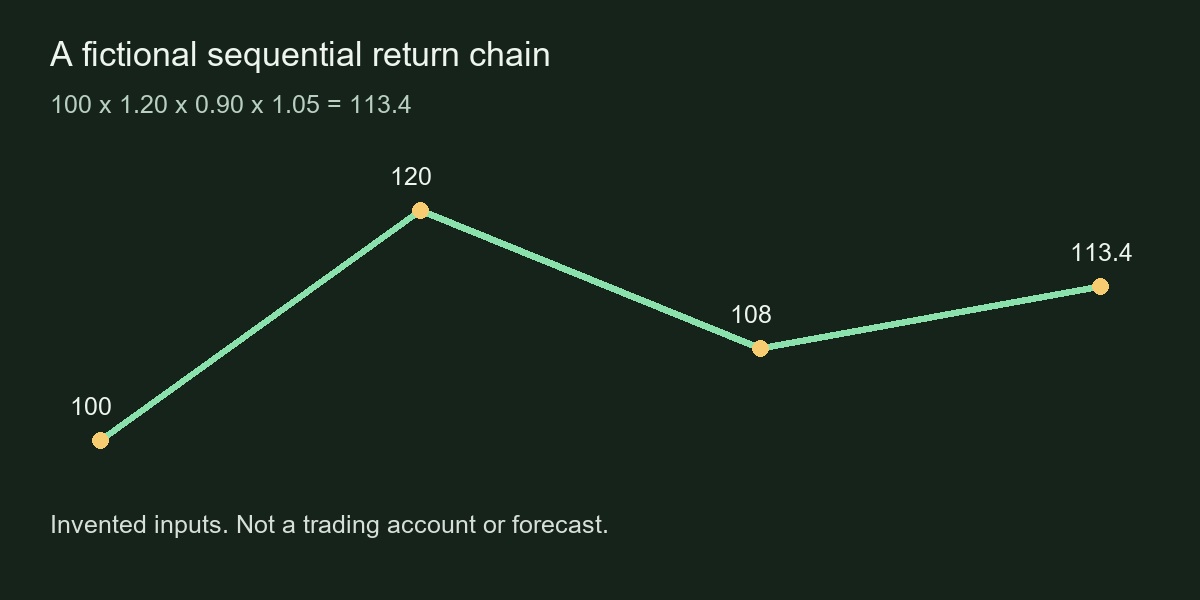
Read a championship title alongside its issuing body, event, division and measured account rather than treating every title as interchangeable.
Separate the performance window, standings cutoff, audit status and date you inspected the source.
Distinguish a sum of reported percentages from a linked same-account return, especially when event windows overlap.
Ask what capital a percentage refers to before comparing account growth, investment returns or monetary gains.
Read a drawdown figure with its equity series, sampling frequency and recovery period, not as a property of a final return alone.
Identify the return series, excess-return convention and period before comparing risk-adjusted figures.
Match the economic definition of a return before subtracting two percentages or describing one account as outperforming another.
Keep percentage performance, economic scale and implementation constraints separate when reading trader profiles.
Understand which traders and records enter a list before interpreting its order or extrapolating its historical results.
Use holdings disclosures for the information they actually contain rather than reconstructing a complete return or risk history from them.
Use file identity and dated source notes to keep an analytical record reproducible without confusing a hash with financial assurance.
Connect titles, education, personal accounts and model histories without merging their years, issuers or measurement objects.