2014 Trading World Champion Rankings
Published January 2015Top 5 Rankings
| Rank | Trader | Specialty | Notable Achievement |
|---|---|---|---|
| 1 | Bill Ackman | Activist / Long-Short | ~40.4% net return, $2.6B Allergan profit, Pershing Square |
| 2 | Michael Cook | Futures | 366% audited return, World Cup Trading Championship Futures champion |
| 3 | Ken Griffin | Multi-Strategy | 17.9–26.4% across Citadel funds, $1.4B personal earnings |
| 4 | Thorsten Helbig | Forex | ~69.7% audited return, World Cup Trading Championship Forex champion |
| 5 | Paul Skarp | Futures | ~343.8% audited return, World Cup Trading Championship Futures runner-up |
Profiles
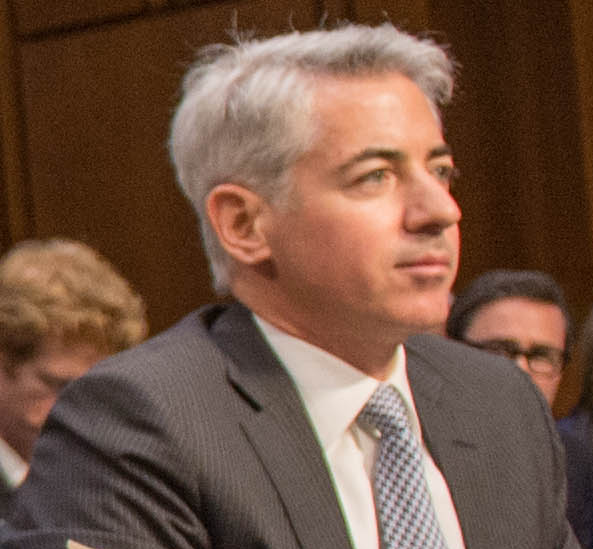
Bill Ackman delivered the most consequential trading year of his career in 2014, generating a net return of approximately 40.4% at Pershing Square Capital Management and producing $4.5 billion in net gains for investors. In a year where the average hedge fund returned roughly 3% and the S&P 500 gained 11.4%, Ackman's concentrated, activist-driven portfolio outperformed both benchmarks by an enormous margin. With approximately $14 billion in assets under management, this was not a small fund getting lucky on a single position — it was a multi-billion-dollar institution delivering returns that most funds of any size would be proud to claim over a three-year period.
The centerpiece of Ackman's 2014 was the Allergan trade. Pershing Square quietly accumulated a 9.7% stake in the pharmaceutical giant worth approximately $4 billion, then partnered with Valeant Pharmaceuticals to launch an unsolicited $51 billion takeover bid. The resulting bidding war — which drew in Actavis as a white-knight acquirer at $66 billion — drove Allergan's share price sharply higher. When Actavis won the deal in November, Pershing Square exited its position with a profit of $2.6 billion on a single trade, one of the largest single-position gains by any hedge fund manager in 2014. The entire campaign, from initial accumulation to exit, lasted less than nine months.
Beyond Allergan, Pershing Square's concentrated portfolio of activist positions contributed to the year's result. Ackman's fund typically holds only six to ten core positions, each representing a significant percentage of the portfolio, and applies activist pressure — board seats, public campaigns, strategic proposals — to unlock value. This approach had produced strong results in prior years with companies like Canadian Pacific Railway and General Growth Properties. In 2014, the combination of a market-beating long portfolio and the Allergan windfall produced a year that cemented Ackman's standing among the top fund managers globally. LCH Investments subsequently named him one of the world's top 20 hedge fund managers based on lifetime net gains of $11.6 billion through 2014.
Ackman's selection as the 2014 Trading World Champion reflects the scale and skill of the year's performance. A 40.4% return at a $14 billion fund is a fundamentally different achievement than the same return at a $10 million competition account — the market impact, liquidity constraints, and execution complexity are orders of magnitude greater. The Allergan trade in particular demonstrated a level of strategic thinking that went beyond pure market timing: identifying an undervalued target, structuring a partnership to catalyze a revaluation, and ultimately profiting when a third party validated the thesis at a higher price. It was activist investing at its most effective. Full article »
Michael Cook won the 2014 World Cup Trading Championships futures division with an audited return of 366%, the highest verified trading result of the year in any major global competition. This was Cook's second World Cup Trading Championship futures title, having previously won in 2007 with a 250% gain, and he had also captured the World Cup Championship of Stock Trading in 2011 — making him one of the rare traders to win across multiple World Cup Trading Championship divisions. A former institutional trader who left the bank and hedge fund world to trade for himself, Cook brought professional-grade discipline to the competition format. His 366% in 2014, fully audited through a US-regulated broker, was produced during a year of collapsing oil prices and sharp currency moves that rewarded directional conviction.
Cook's ranking at #2 behind Ackman reflects this site's weighting of scale alongside raw return. In pure percentage terms, Cook's 366% dwarfs Ackman's 40.4%, and there is a legitimate argument that the World Cup Trading Championship result was the more impressive display of trading skill per dollar at risk. However, the competition format involves smaller account sizes and different risk tolerances than institutional fund management. What cannot be debated is that Cook's result was real, audited, and placed him among the most accomplished competition traders of the modern era. His consistency across 2007, 2011, and 2014 suggests a durable edge that few traders at any level can match.
Ken Griffin's Citadel posted double-digit returns across all three of its major funds in 2014: the flagship Kensington and Wellington funds returned 17.9%, the Global Equities fund gained 23.4%, and Citadel Tactical Trading surged 26.4%. In a year when the average hedge fund returned approximately 3%, Citadel outperformed the industry by a factor of six to nine depending on the fund. The firm ended 2014 managing $24 billion in assets and generating an estimated $1.4 billion in personal earnings for Griffin — placing him among the highest-paid hedge fund managers in the world for the year.
What distinguished Citadel's 2014 was the breadth of the outperformance. This was not a single-strategy fund that caught one favorable trend — it was a multi-strategy platform producing strong results across equities, credit, energy, and quantitative strategies simultaneously. The oil crash in the second half of the year created enormous dislocations in energy credit markets, and Citadel's ability to deploy capital across asset classes allowed it to profit from volatility that punished more narrowly focused managers. Griffin's inclusion at #3 reflects the institutional weight of delivering these returns at scale, across multiple strategies, while managing risk at a level that has kept Citadel among the world's dominant hedge fund platforms for over two decades.
Thorsten Helbig of Germany won the 2014 World Cup Trading Championships forex division with an audited return of approximately 69.7%, the top verified forex result of the year. Based in Germany, Helbig traded currencies through a year defined by dramatic central bank divergence: the Fed was tapering and signaling rate hikes, the ECB introduced negative interest rates for the first time, and the Bank of Japan expanded its already massive quantitative easing program. The US dollar's surge against the euro, yen, and most emerging-market currencies created strong directional trends that rewarded traders with the conviction to stay positioned through extended moves.
Helbig's 69.7% return in the World Cup Trading Championship forex division is a strong result by any measure. The forex competition, like the futures division, requires real-money accounts with full broker auditing, and the position-sizing constraints of currency trading produce different return profiles than leveraged futures. In a year where the dollar index gained over 12% — one of its strongest annual rallies in decades — a skilled forex trader who identified and rode that trend had the opportunity to produce meaningful returns. Helbig did exactly that, and his German base gave him particular insight into the euro's vulnerability as the ECB shifted toward increasingly aggressive monetary easing.
Paul Skarp of the United States finished as runner-up in the 2014 World Cup Trading Championships futures division with an audited return of approximately 343.8% — a result that in the vast majority of World Cup Trading Championship competition years would have been good enough to win. Skarp's performance was overshadowed only by Michael Cook's 366%, and the two traders pushed each other to extraordinary levels throughout the year. Both tripled their accounts several times over in a year where the oil crash, the Crimea crisis, and the dollar rally created exactly the kind of volatile, trending conditions that favor skilled futures traders.
Skarp's 2014 result was a precursor to what would become one of the most impressive long-term careers in World Cup Trading Championship history. He would go on to win the World Cup Trading Championship futures title outright in 2015 with a 219.1% audited return, and then return a decade later to win again in 2025 with 256% — becoming one of the rare traders to claim the championship in two different decades. The 2014 runner-up finish, viewed in the context of that arc, was the year Skarp announced himself as a world-class competition trader. That his 343.8% was not enough to win speaks to the remarkable quality of the 2014 World Cup Trading Championship futures field.
« 2013 Rankings | All Years | 2015 Rankings »
Rankings are editorial selections based on publicly available information as of Dec 2014. More info.