David Tepper: 2013 Trading World Champion
Published January 6, 2014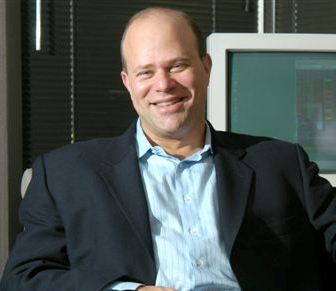
David Tepper is the 2013 Trading World Champion. Appaloosa Management, the Short Hills, New Jersey–based hedge fund Tepper founded in 1993, returned approximately 42% in 2013 — outpacing the S&P 500's 29.6% gain by a wide margin and more than quadrupling the average hedge fund's 9.3% return. That performance earned Tepper an estimated $3.5 billion in personal income, making him the highest-paid hedge fund manager in the world for the second consecutive year according to Institutional Investor's Alpha Rich List. In an industry where the majority of professionals failed to beat a passive index fund, Tepper did not merely beat it — he beat it by more than twelve percentage points while managing roughly $17 billion in assets.
The thesis behind Tepper's 2013 was deceptively simple. With the Federal Reserve committed to open-ended quantitative easing and short-term interest rates pinned at zero, Tepper reasoned that equities were the most attractive asset class by a wide margin. Cash yielded nothing. Bonds were vulnerable to rate increases. Real estate had recovered much of its post-crisis discount. Equities, particularly in sectors still trading below pre-crisis valuations, were the logical destination for capital in a world of financial repression. Tepper went long and stayed long, concentrating his portfolio in airlines, financials, and other cyclical sectors that stood to benefit from an improving US economy. It was not a complicated strategy. But having the conviction to hold it through a turbulent year — and the scale to execute it across billions of dollars — was what separated Tepper from the field.
The defining test of that conviction came in May and June 2013, when Federal Reserve Chairman Ben Bernanke's testimony before Congress triggered the so-called taper tantrum. Bernanke suggested that the Fed might begin reducing its monthly bond purchases later that year if economic data continued to improve. The reaction was violent: the 10-year Treasury yield surged from 1.6% to 3.0% over the course of several months, emerging-market currencies collapsed, and US equities suffered their worst pullback in months. Many hedge fund managers reduced exposure, hedged aggressively, or rotated into cash. Tepper held his positions. He recognized that the actual tapering was still months away, that the economy was genuinely improving, and that the selloff was driven by positioning rather than fundamentals. By autumn, markets had recovered and resumed their upward march. Those who had panicked in May missed the rally. Tepper, who had not panicked, captured it.
Tepper's career trajectory lends context to the 2013 result. After joining Goldman Sachs and eventually running the firm's junk bond trading desk, Tepper launched Appaloosa in 1993 with $57 million in capital. The fund's early years focused on distressed debt and special situations, but Tepper gradually broadened the mandate to include equity long positions when macro conditions favored them. Over two decades, Appaloosa generated gross annualized returns of approximately 30%, a track record that placed Tepper among the most successful fund managers in hedge fund history. His 2009 result — when he made roughly $7 billion by buying distressed bank stocks and corporate debt at crisis lows — had already established him as one of the great opportunistic traders. The 2013 performance confirmed that the earlier result was not a one-time event but part of a sustained pattern of outperformance.
What makes Tepper's 2013 particularly impressive is the size of the capital base. Generating 42% on a $17 billion fund is a fundamentally different challenge than generating 42% on a small account. At that scale, every position must be large enough to move the needle on the overall portfolio, which means Tepper was taking billion-dollar positions in individual stocks. The market impact of entering and exiting those positions, the liquidity constraints, the inability to be nimble — all of these factors work relentlessly against large funds, which is the primary reason that hedge fund returns tend to degrade as assets under management grow. Tepper solved this problem by concentrating in highly liquid large-cap names and by holding positions for months rather than days, allowing him to build and unwind exposure without creating the kind of market footprint that erodes returns.
The broader hedge fund industry had a decent year in 2013 by its own modest standards, with the average fund returning 9.3% according to Hedge Fund Research. But that figure masked a profound failure: the S&P 500 gained 29.6%, meaning the average hedge fund underperformed a simple index fund by more than 20 percentage points. It was the widest gap since 2005 and reinforced the growing narrative that hedge funds as a group were no longer earning their fees. Against that backdrop, Tepper's 42% was not merely good — it was an indictment of the rest of the industry. He demonstrated that it was possible to beat the market significantly, even at scale, if the thesis was right and the conviction was strong enough to weather temporary adversity.
By the close of 2013, David Tepper had earned more money in a single year than most hedge funds manage in total assets. His $3.5 billion in personal income exceeded the GDP of several sovereign nations and represented the second-largest single-year haul in hedge fund history at that time. More importantly, it was earned through a transparent, directional strategy that any market observer could understand — Tepper simply bet that American stocks would go up in an environment where the Federal Reserve was doing everything in its power to ensure that they would, and he was right. The clarity of the thesis, the conviction to maintain it through the taper tantrum, and the magnitude of the result at enormous scale made David Tepper the clear choice for 2013 Trading World Champion.
« Full 2013 Top 5 Rankings | 2012 Champion | 2014 Champion »
Based on publicly available information as of Jan 2014. About our process.