David Tepper: 2012 Trading World Champion
Published January 4, 2013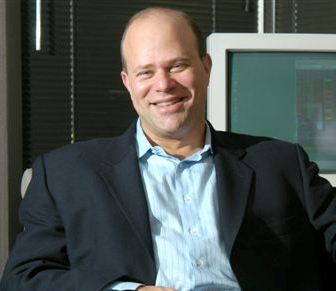
TradingWorldChampion.com launches today with the naming of its first-ever Trading World Champion, and the inaugural recipient of the title is David Tepper, founder and president of Appaloosa Management. The concept behind this site is straightforward: each year, we identify the trader or fund manager whose performance, relative to the opportunity set and the competition, stands above all others. It is not a lifetime achievement award, nor is it purely about the largest percentage return. It is an assessment of who traded best in a given calendar year, weighing absolute performance, scale, risk-adjusted returns, and the difficulty of the prevailing environment. In 2012, no one combined those factors more convincingly than Tepper. Appaloosa returned approximately 30% net of fees on roughly $15 billion in assets, placing Tepper at the top of both the Forbes and Institutional Investor's Alpha rankings of highest-earning hedge fund managers, with an estimated $2.2 billion in personal income for the year.
The 2012 market environment was not one that made strong performance easy or obvious. The year began under the long shadow of the European sovereign debt crisis, with Greece lurching toward potential exit from the eurozone and Spanish bond yields approaching levels that had forced Ireland and Portugal into bailouts. Global equity markets sold off sharply in May as Greek elections threatened to install an anti-austerity government, and the specter of a eurozone breakup weighed on risk appetite worldwide. In the United States, the Federal Reserve signaled increasing willingness to intervene, eventually launching QE3 in September — an open-ended commitment to purchase $85 billion per month in mortgage-backed securities and Treasuries. The S&P 500 ultimately returned 13.4% for the year, but that figure disguised a volatile, news-driven path that punished traders who were either too early or too cautious. The average hedge fund returned roughly 6%, well below the broad market, and a significant number of prominent managers underperformed cash.
Tepper's thesis in 2012 was built on a framework he had articulated publicly in prior years: when central banks are engaged in aggressive monetary easing and governments are committed to preventing systemic collapse, the rational trade is to own risk assets. This was not a universally shared view at the time. Many institutional managers had positioned defensively, hedging against a potential European disintegration that could have triggered contagion across global financial markets. Tepper acknowledged the risks but argued that the policy response was asymmetric — that central bankers would err on the side of doing too much rather than too little, and that the downside in equities was therefore more limited than the market was pricing. The July moment when ECB President Mario Draghi declared the bank would do "whatever it takes" to preserve the euro was a vindication of this view, and Tepper was positioned to benefit from it.
Appaloosa's portfolio in 2012 leaned heavily into US equities and select credit positions, with particular emphasis on sectors that would benefit from continued economic recovery and monetary stimulus. Tepper had long favored concentrated positions — a hallmark of his approach since founding Appaloosa in 1993 after running Goldman Sachs' junk bond trading desk. The firm's origins in distressed debt had instilled a discipline of buying assets at steep discounts to intrinsic value, and Tepper applied that same framework to equity markets when he believed the risk-reward was compelling. The result in 2012 was a portfolio that captured the bulk of the market's upside while avoiding the sectors and geographies most exposed to tail risk.
What distinguished Tepper from other strong performers in 2012 was the combination of return, scale, and conviction. Returning 30% on $15 billion is a fundamentally different achievement than returning 30% on $500 million. Market impact, liquidity constraints, and the sheer difficulty of finding enough high-conviction ideas to deploy that much capital make large-fund outperformance exponentially harder. Ken Griffin's Citadel posted approximately 25% on a comparable asset base, which was itself an exceptional result. But Tepper did it with a more concentrated, higher-conviction approach — fewer positions, larger sizing, and a willingness to hold through drawdowns that would have triggered risk reduction at most institutional firms. That willingness to endure discomfort in pursuit of a well-reasoned thesis is what separates great traders from good ones.
Tepper's career trajectory lends context to the 2012 result. His 2009 performance — a 117% return driven by massive purchases of distressed bank stocks at the nadir of the financial crisis — had already established him as one of the most successful traders of his generation. The 2012 result was less spectacular in percentage terms but arguably more significant as evidence of a repeatable process. In 2009, the opportunity was extraordinary and the dislocation was historic. In 2012, the opportunity was more subtle: a market that was priced for a recession that central banks were determined to prevent, where the upside was meaningful but not obvious, and where the correct trade required a macro framework that many sophisticated managers rejected. Producing 30% net in that environment, at that scale, was not the work of a trader who got lucky with one big call. It was the product of a coherent worldview, the courage to act on it, and the portfolio management skill to express it efficiently.
For the first Trading World Champion designation, David Tepper sets the standard that future honorees will be measured against: dominant performance at scale, a clearly articulated and ultimately correct investment thesis, and a result recognized across the industry as the best of the year. Tepper's 2012 was not defined by a single dramatic trade or a narrow sectoral bet, but by the totality of his performance — the returns, the capital base, the risk taken, and the environment navigated. He earned more than any hedge fund manager on the planet, outperformed the vast majority of his peers, and did it by making a bold but rational assessment of where the world was headed. That is what the Trading World Champion title is designed to recognize, and David Tepper is the right person to be its first recipient.
« Full 2012 Top 5 Rankings | 2013 Champion »
Based on publicly available information as of Jan 2013. About our process.